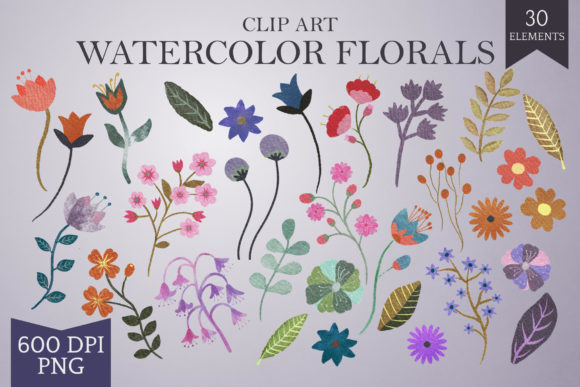
Hand-drawn Watercolor Floral Elements for Design
In a digital landscape often dominated by sharp vectors and sterile geometric shapes, there remains a profound appreciation for the organic imperfection of hand-crafted art. Hand-drawn watercolor floral elements offer a bridge between traditional artistic techniques and modern digital workflows. These assets are not merely clip art; they are textured, high-resolution components designed to infuse warmth, authenticity, and a human touch into commercial and personal projects. When you integrate thirty unique, hand-painted botanicals into your work, you are choosing a visual language that speaks of care, detail, and natural beauty.
The specific collection described here stands out due to its technical fidelity. Created at 600 DPI using genuine watercolor brushes on textured paper, these elements retain the subtle granulation and fluid edge variations that define the medium. Unlike lower-resolution graphics that pixelate when scaled, these files provide the clarity needed for professional print production while remaining versatile enough for screen display. The inclusion of transparent PNG formats ensures that designers can layer these florals over any background color or pattern without unsightly white boxes or jagged edges, offering complete creative freedom.
The Value of High-Resolution Texture in Digital Design
Why does resolution matter so much when working with floral motifs? The answer lies in the nature of watercolor itself. The charm of this medium comes from the way pigment pools, dries, and interacts with paper grain. If an image is low resolution, these delicate textures blur into muddy blobs, losing the very characteristic that makes them appealing. With assets rendered at 600 DPI, every brushstroke and paper tooth is preserved. This allows marketers and designers to scale elements from small sticker icons up to large book cover illustrations without sacrificing quality.
The range of sizes included in this set, varying from compact 200px accents to substantial 1100px centerpieces, provides immediate utility. You are not forced to stretch a tiny icon to fit a header, nor do you have to crop a massive illustration down to a favicon. This variety supports a cohesive design system where different elements from the same family can be used across various touchpoints—social media posts, email headers, and physical merchandise—while maintaining a consistent visual identity.
Elevating Brand Identity and Packaging
For small business owners and entrepreneurs, particularly those in the wellness, beauty, or artisanal food sectors, branding is about evoking a feeling. Hand-drawn watercolor floral elements are exceptionally effective for communicating values of natural ingredients, gentleness, and craftsmanship. Imagine a line of organic soaps or a boutique tea brand. Using these textured florals on packaging labels instantly signals to the consumer that the product inside is curated and thoughtful, distinct from mass-produced alternatives.
When applying these elements to packaging, consider the concept of "white space." Because watercolor art often has soft, fading edges, it pairs beautifully with minimalist layouts. Allow the flowers to breathe on the label rather than crowding them with text. Use the larger elements as focal points on the front of a box, and utilize the smaller petals or leaves as subtle patterns on the interior lining or receipt cards. This creates an unboxing experience that feels premium and personalized.
Practical Applications for Publishers and Authors
Self-publishing authors and independent publishers face the challenge of making their books stand out in a crowded marketplace, both online and on physical shelves. A book cover adorned with high-quality watercolor florals can suggest genre and tone immediately. For romance, historical fiction, or poetry collections, these elements provide a classic yet contemporary aesthetic. The transparency of the PNG files allows the artwork to sit seamlessly over photographic backgrounds or solid colors, giving the cover designer total control over the composition.
Beyond the cover, these thirty elements serve as excellent chapter dividers or section breaks within the interior layout. Placing a delicate floral sprig at the start of a new chapter adds a rhythmic pause for the reader and elevates the perceived value of the book. Educators creating workbooks or planners can similarly use these graphics to break up dense text, making educational materials more inviting and less intimidating for students of all ages.
Creative Strategies for Digital Content Creators
Bloggers and social media managers constantly need fresh visuals to maintain audience engagement. Stock photography can often feel generic, but custom composites using hand-drawn elements offer a unique signature style. You can create quote graphics where the text floats amidst a arrangement of watercolor leaves and blooms. Because the elements are hand-drawn, they add a layer of personality that flat vector icons often lack.
Consider creating a library of templates for your recurring content pillars. For instance, if you run a lifestyle blog, you might create a standard header format using a specific cluster of flowers from this set. By consistently using the same style of illustration, you build brand recognition. Followers will begin to associate that specific floral aesthetic with your voice and advice. Furthermore, these elements are perfect for creating digital stickers for platforms like GoodNotes or Notion, catering to the massive community of digital planners who seek aesthetic functionality.
- Journaling and Scrapbooking: Print the elements on high-quality cardstock to create physical embellishments for bullet journals or memory keepers.
- Wedding Stationery: Combine different elements to frame invitations, create menu cards, or design thank-you notes that feel bespoke rather than templated.
- Web Design: Use the smaller 200px elements as decorative bullets for lists or as subtle background watermarks to add depth to website sections.
- Merchandise: Apply the designs to tote bags, mugs, or phone cases, leveraging the high DPI to ensure crisp printing results.
Maintaining Consistency and Originality
While these assets are ready to use, the most successful projects adapt them to fit a specific context rather than dropping them in unchanged. To keep your results original, experiment with color grading. Although watercolor is traditionally associated with soft pastels, these PNGs can be recolored in software like Photoshop or Procreate to match a bold, modern brand palette. You might shift a soft pink rose to a deep burgundy or change green foliage to a muted sage or even a monochromatic blue.
Organization is also key when working with a set of thirty varied elements. Before starting a project, sort the files by size or type (e.g., full blooms vs. single leaves). This workflow efficiency prevents the creative process from stalling. When combining elements, pay attention to lighting and perspective. Even though these are stylized illustrations, arranging them in a way that suggests a natural growth pattern—rather than a rigid grid—will yield more professional and aesthetically pleasing results.
Ultimately, the power of hand-drawn watercolor floral elements lies in their versatility and emotional resonance. They provide a toolkit for creators who want to move beyond the generic and inject a sense of humanity into their digital and physical products. Whether you are designing a best-selling novel, launching a skincare line, or simply organizing your daily planner, these high-fidelity assets offer the texture and depth needed to make your work memorable. By understanding the technical strengths of the 600 DPI files and applying them with strategic intent, you can transform simple designs into compelling visual stories.