Bringing Nature Indoors: The Versatility of Flower Bushes Motif Decorative Art
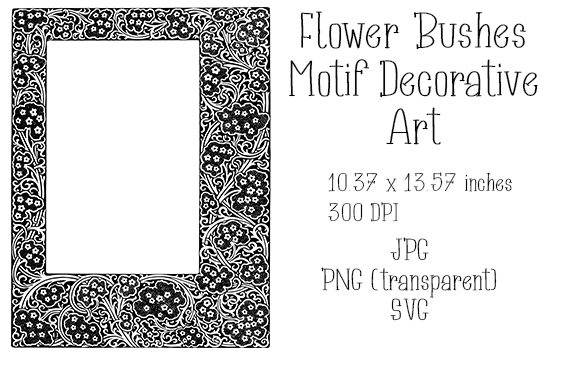
There is a specific kind of quiet satisfaction that comes from finding the perfect visual element to complete a project. Whether you are designing a wedding invitation, laying out a self-published novel, or simply trying to add a touch of elegance to a digital blog post, the right imagery can transform a generic layout into something that feels curated and intentional. This is where Flower Bushes Motif Decorative Art shines. It isn't just a clipart image; it is a versatile design asset that bridges the gap between classic botanical illustration and modern digital utility.
At its core, this motif features intricate arrangements of flowering shrubs, rendered with a level of detail that suggests hand-drawn precision. Because it originates from the public domain, it carries a timeless quality free from the sterile feel of some modern stock photography. The specific file available in high resolution (300 DPI) with dimensions around 10.37 x 13.57 inches offers a unique advantage: it is large enough for print but flexible enough for screen use. When you have access to formats like JPG, PNG with transparency, and SVG, you aren't just buying an image; you are acquiring a tool that adapts to your workflow.
Why Publishers and Authors Choose Botanical Motifs
For independent authors and small publishing houses, the cover is the single most important marketing tool. A cluttered or low-quality cover can signal amateurism, while a clean, professional design invites readers in. Flower Bushes Motif Decorative Art is particularly effective for genres like historical fiction, romance, poetry collections, and gardening guides. Imagine a paperback novel set in the Victorian era; placing this motif on the title page or wrapping it around the spine creates an immediate atmospheric connection for the reader before they even turn the first page.
The high DPI (dots per inch) is critical here. Many creators make the mistake of using web-resolution images for print, resulting in pixelated, blurry covers that look unprofessional. With a 300 DPI source file, you ensure that every leaf and petal remains crisp when printed on demand through services like Amazon KDP. Furthermore, the transparent PNG version allows you to layer the flowers over colored backgrounds or textured paper scans without unsightly white boxes ruining the composition. You can fade the opacity to create a subtle watermark effect behind chapter titles, adding depth to the interior layout without compromising readability.
Elevating Brand Identity for Small Businesses
Beyond books, this type of decorative art is a goldmine for entrepreneurs building a brand identity rooted in nature, wellness, or artisanal craftsmanship. Consider a small business owner selling handmade soaps, organic teas, or pressed flower jewelry. Their packaging needs to communicate purity and natural ingredients instantly. Using the SVG version of the flower bushes motif, a designer can scale the artwork to fit perfectly on a small product label or a large shipping box without any loss of quality.
Unlike raster images (JPG/PNG) which can become jagged when enlarged, the SVG format uses mathematical paths to define shapes. This means a freelance graphic designer can take this single motif and apply it across an entire brand suite—business cards, letterheads, social media banners, and website headers—ensuring consistency. A bakery might use the motif to frame their menu, while a wedding planner could incorporate it into their proposal templates. The "public domain" status is a significant financial benefit here; unlike subscription stock sites that charge recurring fees or limit usage, public domain art allows for unlimited commercial use without worrying about licensing expiration or attribution requirements.
Practical Applications for Educators and Content Creators
In the educational sector, visual aids are essential for engagement. Teachers creating worksheets on botany, literature, or history can use these motifs to break up walls of text and make materials more inviting. For homeschooling parents designing custom curriculum packets, the ability to download a high-quality image instantly saves hours of searching for safe-to-use content. You can place the flower bushes in the corners of a handwriting practice sheet or use them as decorative dividers between sections of a study guide.
Digital content creators, such as bloggers and YouTubers, also benefit significantly. A lifestyle blogger writing about spring cleaning or garden preparation can use the transparent PNG to overlay flowers onto their featured images, creating a cohesive aesthetic that matches their site's theme. Because the background is transparent, the integration looks seamless regardless of the photo underneath. For video editors, these static images can be animated slightly—perhaps adding a slow zoom or pan effect—to serve as elegant transitions between segments of a vlog or tutorial.
What to Consider Before You Download and Use
While the versatility of Flower Bushes Motif Decorative Art is vast, successful implementation requires a bit of strategic thinking. First, consider your color palette. Since this is likely a black-and-white or sepia-toned line drawing (typical of vintage public domain works), it pairs best with solid colors or muted pastels. If you plan to use it on a busy photographic background, you may need to adjust the contrast or add a solid shape behind the motif to ensure it doesn't get lost in the noise.
Secondly, think about the file format that suits your specific task. If you are sending a file to a professional printer, the TIFF or high-res JPG is often the safest bet to avoid compatibility issues. However, if you are editing in software like Canva, Procreate, or Adobe Illustrator, the PNG with transparency or the SVG will save you time on masking and cutting out backgrounds. Always check the dimensions relative to your canvas size. Even at 10.37 x 13.57 inches, if you are designing a billboard, you will need to vectorise the image or tile it, whereas for a standard book cover, the native resolution is likely perfect.
Finally, respect the spirit of the art. Vintage motifs carry a certain gravitas. They work best when treated with care rather than being stretched, distorted, or cluttered with too many other elements. Let the intricate details of the flower bushes breathe. White space is your friend; allowing the motif to stand alone or frame a central piece of text often yields a more sophisticated result than trying to fill every inch of the page.
Making the Most of Public Domain Resources
The true power of using public domain assets like this lies in the freedom they offer. There are no hidden fees, no credit lines required in the footer, and no fear of a copyright strike down the road. This security allows creators to take risks. You can experiment with recoloring the flowers to match a brand's specific hex code, cropping the image to focus on a single cluster of blooms, or combining it with other public domain elements to create a entirely new composite illustration.
Whether you are a hobbyist scrapbooking a family garden journal or a marketing agency pitching a campaign for a floral perfume, the utility of this asset remains consistent. It provides a bridge between the organic beauty of nature and the structured needs of design. By understanding the technical strengths of the file formats and the aesthetic potential of the motif, you can elevate your projects from functional to memorable, proving that sometimes the best design solutions are the ones that have stood the test of time.